

Finland’s need for international workers is not slowing down. An ageing population, skills gaps and large industrial projects are keeping work-based immigration high on the country’s agenda in 2026.
The Finnish Immigration Service, known as Migri, expects first work-based residence permit applications to reach around 11,000 to 13,000 in 2026, compared with about 11,000 in 2025. Applications rose by 16% in January to May 2026 compared with the same period in 2025.
Part of that growth is linked to major projects, including shipbuilding and data-centre development. But the wider story is bigger than a few construction sites. Finland needs skilled people to keep services running, support industry and replace workers leaving the labour market.
This guide explains the main Finland work permit 2026 requirements, the salary thresholds, the sectors creating opportunities and the immigration rule that first-time applicants must understand before they apply.
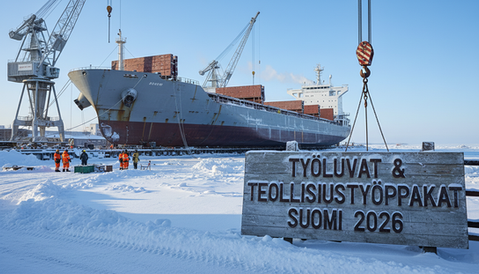
Finland is still relying on international workers in 2026
Finland has one of Europe’s more advanced economies, but it also faces a familiar challenge: the workforce is ageing. As more people retire, employers need new workers in industries that cannot be filled fully through the domestic labour market alone.
Work-based immigration is one way Finland is responding. It supports employers that need staff for skilled and semi-skilled roles, particularly where recruitment inside Finland is difficult.
The 2026 forecast from Migri shows that demand remains steady and may rise. First work-based residence permit applications are expected to reach around 11,000 to 13,000 for the year. That is not an open-door system, but it does show that Finland continues to need foreign talent when applicants meet the rules.
The early figures for 2026 also point to stronger interest. A 16% increase in January to May 2026 compared with the same period in 2025 suggests that employers are still looking abroad, especially for roles connected to large-scale industrial activity.
Several forces are pushing this demand:
Retirement is reducing the number of available workers.
Some industries need specialised skills that are hard to find locally.
Large projects create sudden demand for technical and practical labour.
The economy is expected to stabilise, which can support hiring.
For applicants, the main message is clear. Finland may have job opportunities, but a work permit is still tied to a real job, proper employment terms and the correct residence permit category.
The standard work permit usually starts with a Finnish job offer
For most foreign workers, the central route is the Residence Permit for an Employed Person, often known by the Finnish abbreviation `TTOL`.
This permit is designed for people who have a job in Finland and need residence permission to work in that role. It is not a general job-search permit. The application is built around a specific employment relationship.
To apply for a standard employed person residence permit in 2026, the applicant normally needs:
A confirmed job in Finland
Employment terms provided by the employer
Pay that meets the required salary level
A role that fits the permit category
Supporting documents requested by Migri
A valid passport and proof of identity
The employer plays a key role. They must provide the terms of employment, which helps the authorities assess whether the job conditions meet Finnish requirements. This can include details such as salary, working hours, duties and the employment relationship.
For 2026, the minimum required total gross salary for the standard employed person route is €1,600 per month. This is a gross amount, meaning before tax and deductions.
That salary threshold matters. If the pay is below the required level, the application may not qualify under the standard route. Applicants should check the figures carefully before submitting anything, because salary rules can change and the correct threshold depends on the permit type.
A Finnish work permit is not based only on wanting to work in Finland. It normally depends on a genuine job offer and employment conditions that meet the rules.
This is also why vague job promises are risky. A serious application should be supported by clear employment terms from a real employer in Finland.

Specialists have a higher salary threshold and stricter role expectations
Some workers may qualify under a specialist residence permit rather than the standard employed person route. This category is meant for roles that require special expertise.
In 2026, the minimum gross salary for specialists is €3,937 per month. The job must also require specialist knowledge or advanced expertise. Salary alone is not enough if the role does not match the category.
Specialist roles are often linked to fields such as technology, engineering, data, research, advanced manufacturing or other highly skilled occupations. The exact assessment depends on the duties, the applicant’s background and the employer’s description of the role.
A specialist application should usually make the following points clear:
What the role involves
Why the job requires special expertise
How the applicant’s education or experience fits the role
Whether the salary meets the specialist threshold
Whether the employment terms match Finnish standards
This category can be attractive because Finland needs skilled workers in technical fields. At the same time, applicants should not assume that every qualified worker is automatically a “specialist” for immigration purposes.
For example, a software engineer working on complex systems may fit a specialist route if the job and salary meet the criteria. A general IT support role may not fit the same category, depending on the duties and conditions.
The safest approach is to match the application to the actual job, not to the category that sounds more favourable. Choosing the wrong permit type can delay the process or lead to refusal.
Job opportunities are strongest where skills shortages meet major projects
Finland’s work opportunities in 2026 are closely tied to sectors where employers face shortages or need project-based labour. The current demand is especially connected with technology, industrial projects, shipbuilding, data centres and other skilled occupations.
That does not mean every applicant in these fields will qualify. Immigration approval still depends on the job, pay, permit category and documents. But these sectors help explain why work-based applications are rising.
Technology and digital roles
Finland has demand for people who can build, maintain and secure digital systems. Technology roles may include software development, cloud infrastructure, data systems, cyber security and technical product roles.
Data-centre projects can also create demand beyond core IT jobs. They may require electrical specialists, cooling and energy systems workers, construction-related professionals and maintenance staff.
Shipbuilding and industrial work
Shipbuilding remains a major part of Finland’s industrial activity. Large vessel projects need coordinated labour across many trades and technical roles.
Opportunities may arise for welders, electricians, metalworkers, engineers, project technicians and other skilled workers. These roles often require proven experience, safety awareness and the ability to work to strict standards.
Engineering and technical occupations
Finland’s industrial base needs engineers and technicians across mechanical, electrical, automation and energy-related fields. As projects grow, demand can rise for both planning and hands-on roles.
Applicants with practical experience may be attractive where employers struggle to recruit locally. Finnish or Swedish language skills can help in some workplaces, though many technical teams also operate partly in English.
Skilled occupations on the shortage list
Finland also maintains a national labour-shortage list, which is updated annually. This list matters for people who already hold a Finnish residence permit for an employed person.
Workers who already have this permit may be able to move into occupations on the labour-shortage list without applying for a new residence permit, subject to the applicable rules. This can give some workers more flexibility after they are already in Finland legally and employed under the correct permit framework.
The annual update is important. A job that appears on the list one year may not remain there permanently. Workers and employers should always check the latest version before making decisions.

First residence permit applications normally must be made from outside Finland
One of the most important immigration rules concerns where the first application is submitted.
A first Finnish residence permit application normally has to be submitted from outside Finland. Since September 2024, applying for a first residence permit from inside Finland has been possible only in limited exceptions.
This rule is easy to overlook. Someone visiting Finland as a tourist or on another short-stay basis may think they can simply find a job and apply while still in the country. In most first-permit cases, that is no longer the normal route.
The practical effect is significant:
Applicants should plan to apply before moving to Finland.
Employers should understand the timing before setting a start date.
Travel plans should not be based on assumptions about applying inside Finland.
Anyone already in Finland should check whether an exception applies before filing.
The rule does not mean that no one can ever apply from inside Finland. It means that first permit applications from inside the country are limited to specific exceptions. Applicants should confirm their position with Migri or qualified immigration advice before relying on an exception.
This content is for general information only and is not legal advice. Finnish immigration rules can change, and individual circumstances can affect the correct route.
How applicants can prepare a stronger work permit application
A good application starts before the form is submitted. It starts with making sure the job and documents match the permit route.
The first step is to confirm the job offer. The employer should be real, the role should be clearly described and the employment terms should be complete. If the salary is unclear, the working hours are missing or the duties are vague, the application may face questions.
Next, the salary should be checked against the 2026 threshold. For a standard employed person permit, the minimum total gross salary is €1,600 per month. For specialists, the minimum is €3,937 per month, and the work must require special expertise.
Applicants should also make sure the permit category fits the actual role. A job in Finland does not automatically mean the same permit type for every person. Some roles may fall under different residence permit categories, depending on the work and the applicant’s situation.
Useful preparation includes:
Reading Migri’s current instructions for the chosen permit type
Checking the latest salary requirement
Confirming whether the application must be submitted outside Finland
Preparing identity and employment documents early
Making sure translations or legalisations are handled where required
Keeping copies of all submitted material
Timing also matters. Employers may want a worker to start quickly, but residence permit processing can take time. A realistic start date can reduce pressure for both sides.
For workers already holding a Finnish residence permit for an employed person, the shortage-list rule may be relevant when changing roles. Still, it should not be treated as automatic permission for any job change. The occupation, permit status and current rules all matter.

Finland remains open, but the rules decide the outcome
Finland is still open to foreign workers in 2026, and the numbers show continued demand. Migri expects first work-based residence permit applications to reach around 11,000 to 13,000, with early 2026 applications already higher than the same period in 2025.
The strongest opportunities are linked to real labour needs: technology, industrial projects, shipbuilding, data centres and skilled occupations. Finland’s ageing workforce means international recruitment will continue to play an important role.
For applicants, the bottom line is simple. A successful path starts with a genuine Finnish job offer, employment terms that meet the rules and the correct residence permit. The salary threshold must be met, the permit category must fit the role and first-time applicants normally need to apply from outside Finland.
Finland may need workers, but preparation still matters. Check the current Migri rules, confirm the job details and choose the right permit route before making travel or career decisions.


